Talk about water damage in Australia and many people would automatically think about the tropics and not Perth. The latter is something that has cost people in the Perth suburbs quite a bit when it comes to repair bills.
When Perth’s Rainfall Actually Arrives?
There is one thing that the climate of Perth throws up unexpectedly and this has caught homeowners out. According to Bureau of Meteorology records, the mean rainfall in months from May to September stands at 85.5mm, 127.1mm, 147.0mm, 125.2mm and 79.9mm respectively, with a total annual mean figure of 718.5mm. This means that about 79 per cent of the annual rainfall falls in just five months. Structures which have had a dry spell all summer need to suddenly cope with heavy amounts of moisture in a very short time, and those with even the slightest defect in their waterproofing Perth will show it.
Mean relative humidity recorded by BOM at 3 pm in January is 39 per cent whereas it is 57 per cent in July.
Perth’s Construction Surge and What It Left Behind
Western Australia had 24,223 new dwellings kick off in the year up to March 2026, a 15.2 per cent jump from the year before. The ABS figures, published by the WA Government, show the state’s construction industry is picking up pace. When a city sees a big surge in construction, you often start to see problems with workmanship. One trade in particular that’s heavily reliant on getting things right is wet area waterproofing, or else you end up with water damage down the line.
Loads of homes in Perth that were built during earlier construction booms are now getting to an age where the original membranes and damp proofing systems are starting to show their age. As a result, owners are getting more requests to have them assessed and fixed and some of those homes are pretty tricky to deal with.
The WA Building and Energy division has got its sights set on balcony waterproofing as one of its key audit priorities for 2025–26. It reckons there’s a need for greater focus on getting compliance right for balconies all over the state.
Three Places Water Gets Into a Perth Property
Not all water entry is the same. Getting the source right is what separates a one-off repair from a problem that just keeps coming back.
- Rising damp is a sneaky one; it can work its way up through brick, limestone or mortar, and it’s most often seen in older properties where the damp proof course has been compromised.
- Wet area membranes failing is a big reason why Perth homes get water damage and it’s particularly common in bathrooms, ensuites and laundries where people have made the rookie mistake of relying on grout and adhesive to keep the water out.
- External penetrations like balconies, garden beds built right up against the wall and dodgy flashings are all common entry points for water and they can be tricky to spot until the damage shows up on an interior wall.
What Waterproofing Is, and What It Is Not?
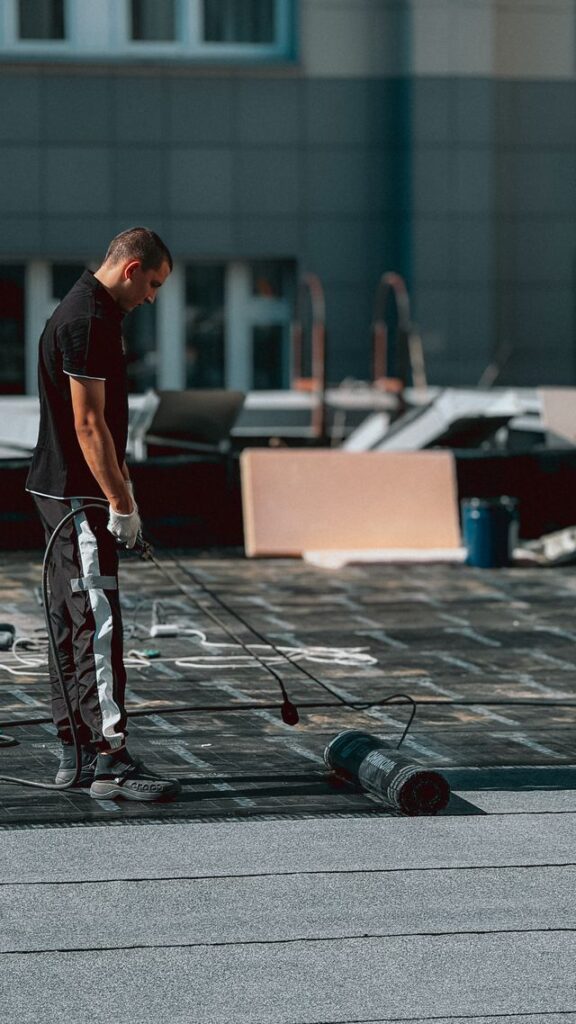
Painting over the top with some sealant or using a quick-fix paint-on product might hide the problem for a bit, but it’ll never actually fix the issue. A real waterproofing process starts with figuring out what’s going on beneath the surface, not just slapping some stuff on top. According to the WA Department of Mines, Industry Regulation and Safety, every project needs a proper assessment to work out what waterproofing requirements are needed because it all depends on the materials, the state of the substrate and what the element is up against.
To top it all off, damp proofing and waterproofing are different beasts altogether. Damp proofing deals with moisture rising through materials, while waterproofing is all about water under pressure or on the surface. Using the wrong system for the job isn’t going to get you anywhere; you’ll just end up with a quick fix at best.
The Commercial Picture
Commercial properties deal with water damage in a different way. In concrete structures, once the water reaches the steel reinforcement inside, it starts a corrosion cycle; the rusting steel expands and cracks the surrounding concrete, causing all sorts of problems like spalling and rust stains. If you don’t get on top of it, it can start to weaken the whole structure.
Starting With the Right Assessment
The first thing you need to do is get a proper damp survey done; that means figuring out whether it’s rising damp, lateral moisture, condensation or a leak in the pipes. Different problems need different solutions, so you can’t just wing it. Moisture metres and thermal imaging can help you check behind surfaces without tearing the walls open. And a written report from the survey is a lot more useful than just some tradesperson showing up with a product already picked out.