Online psychology existed even before 2020, but it was stuck at the fringes of mainstream practice. The expansion of Medicare coverage that kicked in between 2020 and 2022 really helped get the ball rolling for providers, and suddenly in people’s minds it went from being a niche option to something that was definitely a viable and widely accepted way of getting mental health support. A telehealth psychologist today operates with the exact same rules and checks on them as a face-to-face practitioner, the way you do therapy hasn’t changed, just the way you deliver it.
Under the Better Access scheme, people here in Australia can get up to 10 psychology sessions on the Medicare safety net each year via video calls, as long as they have a valid Mental Health Treatment Plan from their doctor. The good news is that the first 6 of those sessions are all covered by your initial GP referral, after that, your doctor has to give you the thumbs up for the final four. The amount of money you’ll need to pay (the out-of-pocket gap) will depend on the individual practitioner, but as of mid-2026, how much you’ll get back from Medicare will also depend on whether you’re seeing a clinical psychologist or a general one, with clinical psychologists getting a higher rebate.
- Telehealth psychologists are on the same team as the rest of the psychologists, they work to the same standards, follow the same rules, all that sort of thing.
- These online sessions are done using super secure video platforms that are all encrypted and don’t need any special software to join.
- One thing to keep in mind is that you can’t use private health insurance on the same session as your Medicare rebate, but if you’ve used up your Medicare entitlements, you might be able to claim the rest on top.
Who Benefits Most from Online Psychology in Australia?
The argument for having a telehealth psychologist is strongest when there’s a genuine problem getting to someone in person, like a huge distance to travel, or mobility issues that make it a real pain.
Rural and remote Australians are really struggling to get the care they need, particularly in places like Queensland, Western Australia and the Northern Territory where the distance to the next town with a specialist is just crazy. Telehealth is a game changer for these people. If you have a chronic health problem or you’re just super busy and can’t keep leaving work, or worse, having to get a babysitter for your kids, then being able to have your session at home is a huge bonus. You can even often get an appointment at a time that suits your schedule, like first thing in the morning or even at lunchtime.
One thing that doesn’t get as much attention is that continuity of care, this means if you move to a different state or city, your therapist can just keep going as normal, without having to start all over again. That’s a real clinical benefit, and not just because it’s more convenient.
What the Research Says About Online vs In-Person Therapy?
There have been plenty of studies now that have looked at thousands of people and found that online therapy is just as good as in-person therapy for people dealing with anxiety, depression, grief and all that sort of heavy stuff. The relationship between you and your therapist, the so-called therapeutic alliance, forms perfectly well over video too. Some people even find it easier to open up when they’re in their own space rather than a clinic.
All the evidence we have suggests that online therapy is okay for all sorts of types of therapy, CBT, ACT, trauma work and EMDR. There’s actually been loads of published research that shows online EMDR is just as effective as doing it in person. Of course there are some situations where you just need to be in the same room, like crisis situations or assessments that need to be done in person. But for the sorts of problems that people usually come to therapy for, the science doesn’t show whether online or in person is better.
What to Expect from your very first Telehealth Session?
The first appointment with a telehealth shrink should feel pretty familiar, with the same structure as that first in-person session we all dread. Most of the time it’s on a browser, no app to download, so that’s a plus. Really you just need a camera, a decent mic and internet that doesn’t decide to give up on you mid-session.
The actual session will cover your background history, what’s currently going on in your life and setting some goals all the usual stuff. Just like an in-person session, you’ll need to find a quiet room with no distractions where you can be alone with your thoughts and the psychologist can keep your conversation confidential. Loads of clients say they feel way more at ease when they do this in a setting they know and love at home. The connection usually takes a minute or two to set up and you won’t have to sit around some waiting room twiddling your thumbs either.
Some things to make sure of:
- You’re in a room that’s nice and quiet during the session.
- Run a quick check on your camera and mic before the session starts to save everyone’s time.
- Sort out the GP Mental Health Treatment Plan and referral before the first session so you can get that Medicare rebate.
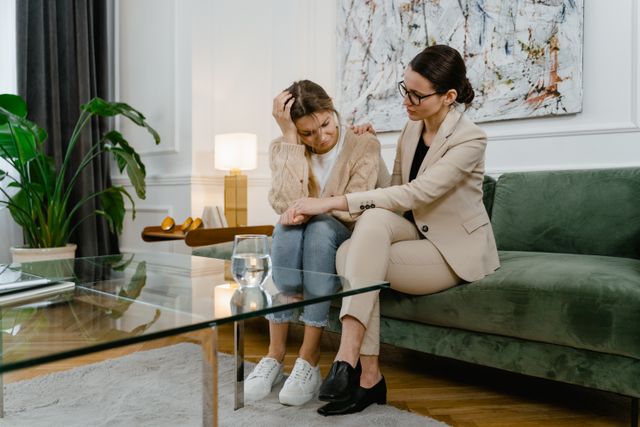
The Rebate Reality, What It Actually Costs You After Medicare Gives You Some Cash Back
Medicare rebates for telehealth psychology sessions are exactly the same as they are for in-person sessions. If you’re seeing a clinical psychologist, you’ll get a bit more cash back per session than if you were seeing a general psychologist, and the out-of-pocket gap is the bit that’s left over after they give you the rebate. This varies depending on what each practitioner charges, but that’s the bit you’ll be left with. Some telehealth providers offer bulk billing for folk who are eligible, though this isn’t a guarantee. Private health insurance may cover some of the costs beyond Medicare’s 10 free sessions per year, but you can’t get both rebates for the same session. It’s worth double-checking with the shrink before booking to avoid any nasty surprises when it comes time to pay.