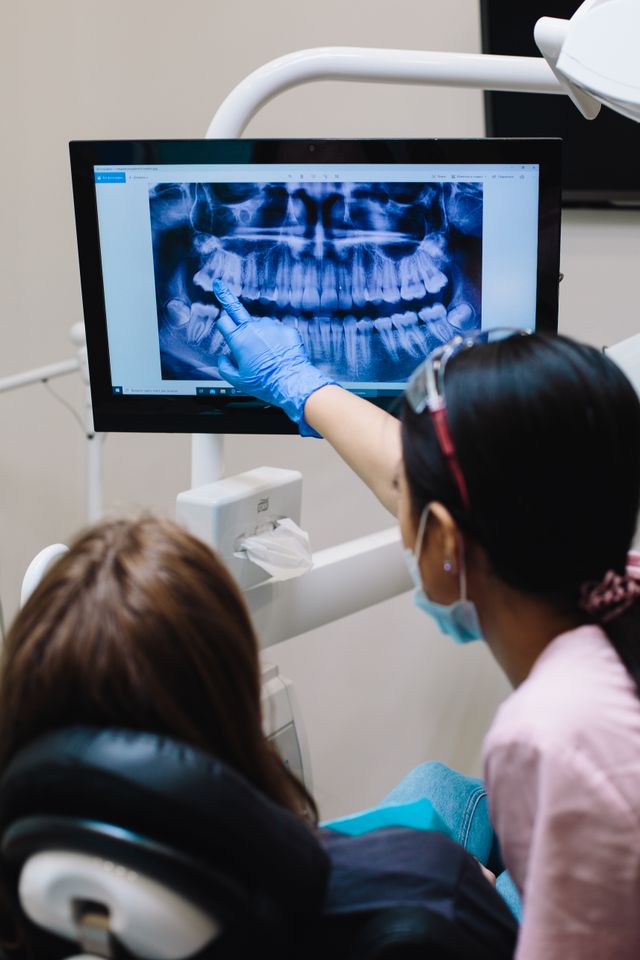
Cone Beam Computed Tomography (CBCT) generates three-dimensional images of teeth, bone, nerves, sinuses, and surrounding oral tissue. That is a technical distinction from a standard dental X-ray, but the practical difference is huge. With a conventional two-dimensional radiograph, a dentist is provided with a two-dimensional representation of structures that exist in three dimensions. They need to estimate the height of bone, the width of bone, the position of the nerve, and the relationship of the adjacent anatomical structures. With CBCT, clinicians can measure directly, plan precisely, and identify problems that would not show up on a standard image at all.
Why Implant Planning Changed Most Dramatically?
Before any surgical procedure to place dental implants, a clinician needs to know the height, width, density, and proximity to the nearest nerve or sinus of the bone where the implant will be placed. While panoramic X-rays have been the standard for implant planning for many years, they only provide a 2-dimensional (flat) view of these dimensions. CBCT gives the full 3-dimensional picture. Studies on CBCT-based implant planning showed that clinicians would maintain a safety margin of around 2 mm from vital anatomical structures when using three-dimensional data. That level of accuracy is not possible from a flat image alone.
AI-assisted CBCT planning is now taking it a step further. Reported rates of detection accuracy for AI systems to locate teeth, edentulous areas, and anatomical landmarks from CBCT data are as high as 99.7% (92-99.7%). Mandibular implant planning applications have an overall accuracy of 96% (systematic review). These are not marginal improvements. They represent a significant decrease in the uncertainty that has long made complex implant cases high-risk. The technology is moving from being a specialist tool to the standard workflow.
The Applications That Get Less Attention
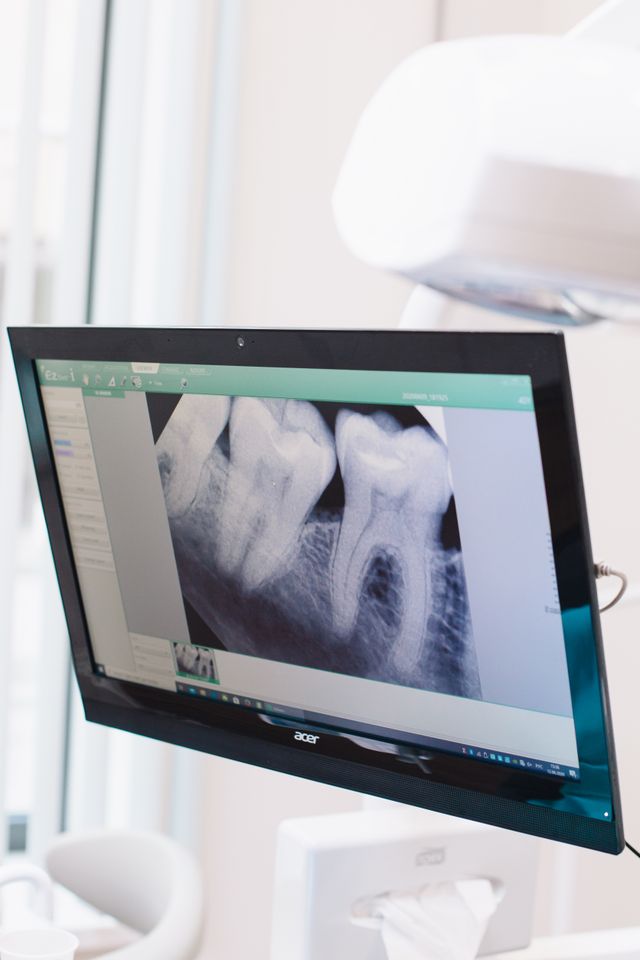
While implant dentistry may receive the most attention when CBCT is mentioned, the technology has applications in several other areas of dentistry as well. For example, in endodontics (root canal treatment), CBCT can reveal root fractures, accessory canals, and periapical pathology that are not visible at all on conventional radiographs. In orthodontics, three-dimensional imaging enables clinicians to assess root positions and alveolar bone thickness in a new way. One study reported that 33% to 43% of orthodontists changed their treatment plans after evaluating CBCT data not available through standard imaging. That is a high percentage of cases in which the initial treatment plan would have been based on partial information.
A dental emergency, such as an acute infection, facial trauma, or a suspected fracture, is a situation where the three-dimensional imaging can be critical because it will give a level of diagnostic clarity that a standard X-ray cannot. It allows a Canberra dental emergency clinic with CBCT access to assess the full extent of the problem in a single scan rather than having to piece information together from multiple limited images. In such situations, time is of the essence. Having a complete picture of what is going on inside the jaw and surrounding structures from a single imaging session is most important.
The Limitations That Clinicians Are Honest About
There are trade-offs to CBCT. A CBCT produces less radiation dose than a conventional medical CT, but more than a standard dental X-ray. While radiation dose from a CBCT scan is less than that of a conventional medical CT, professional guidelines are clear that CBCT should only be used when the diagnostic benefit justifies the exposure. It is not appropriate as a routine scan for every patient. The equipment itself is a considerable outlay for a dental practice, often costing tens or hundreds of thousands of AUD before software, maintenance, and training costs are considered. These costs flow through to patients, meaning that CBCT-based treatment is not available to all practice settings.
The other challenge that practitioners take seriously is interpretation. A CBCT scan provides a broad anatomical field. The clinician is accountable for reviewing everything that is visible within that field, not only the area of primary interest. Missed incidental findings have medico-legal consequences. Many practices will use specialist radiology reporting services in conjunction with their own clinical review. Human expertise in reading these images is still vital, even as AI systems become more capable of flagging anomalies across the full scan.
The practical takeaway for patients is simple: If a dentist suggests a CBCT scan prior to implant placement, complex root canal treatment, orthodontic planning, or an urgent assessment, the request is for a legitimate diagnostic need rather than a routine upsell. This is because flat images were leaving clinicians working with incomplete information. The evidence on planning accuracy, treatment modification rates, and AI-assisted detection all point to the same conclusion. Three-dimensional imaging leads to better-informed decisions. Better-informed decisions lead to better outcomes.